What Is the Term That Refers to the Connective Tissue Layer of the Skin Beneath the Epidermis?
Introduction
Peel is the largest organ in the torso and covers the torso's entire external surface. Information technology is made upwards of three layers, the epidermis, dermis, and the hypodermis, all three of which vary significantly in their anatomy and function. The skin'due south structure is made up of an intricate network which serves as the body's initial barrier against pathogens, UV light, and chemicals, and mechanical injury. It as well regulates temperature and the amount of water released into the surround. This article discusses the relevant anatomical structures of the skin's epidermal layer, its construction, function, embryology, vascular supply, innervation, surgical considerations, and clinical relevance.
Skin Thickness
The thickness of each layer of the peel varies depending on body region and categorized based on the thickness of the epidermal and dermal layers. Hairless skin institute in the palms of the hands and soles of the feet is thickest because the epidermis contains an extra layer, the stratum lucidum. The upper back is considered thickest based on the thickness of the dermis, but it is considered "thin skin" histologically because the epidermal thickness lacks the stratum lucidum layer and is thinner than hairless peel.
Layers of Epidermis
The layers of the epidermis include the stratum basale (the deepest portion of the epidermis), stratum spinosum, stratum granulosum, stratum lucidum, and stratum corneum (the most superficial portion of the epidermis).
Stratum basale, likewise known as stratum germinativum, is the deepest layer, separated from the dermis past the basement membrane (basal lamina) and attached to the basement membrane by hemidesmosomes. The cells institute in this layer are cuboidal to columnar mitotically agile stalk cells that are constantly producing keratinocytes. This layer also contains melanocytes.
Stratum spinosum, viii-ten jail cell layers,also known equally the prickle jail cell layer contains irregular, polyhedral cells with cytoplasmic processes, sometimes called "spines", that extend outward and contact neighboring cells by desmosomes. Dendritic cells can be institute in this layer.
Stratum granulosum, iii-5 prison cell layers, contains diamond shaped cells with keratohyalin granules and lamellar granules. Keratohyalin granules incorporate keratin precursors that eventually amass, crosslink, and grade bundles. The lamellar granules incorporate the glycolipids that go secreted to the surface of the cells and function as a mucilage, keeping the cells stuck together.
Stratum lucidum, 2-3 cell layers,nowadays in thicker skin found in the palms and soles, is a thin articulate layer consisting of eleidin which is a transformation product of keratohyalin.
Stratum corneum, twenty-thirty prison cell layers,is the uppermost layer, made upward of keratin and horny scales made upwardly of dead keratinocytes, known every bit anucleate squamous cells. This is the layer which varies virtually in thickness, especially in callused skin. Inside this layer, the dead keratinocytes secrete defensins which are role of our first immune defense.
Cells of the Epidermis
-
Keratinocytes
-
Melanocytes
-
Langerhans' cells
-
Merkel's cell
Keratinocytes
Keratinocytes are the predominant cell type of epidermis and originate in the basal layer, produce keratin, and are responsible for the formation of the epidermal water barrier past making and secreting lipids. Keratinocytes also regulate calcium absorption by the activation of cholesterol precursors by UVB lite to form vitamin D.
Melanocytes
Melanocytes are derived from neural crest cells and primarily produce melanin, which is responsible for the paint of the skin. They are plant between cells of stratum basale and produce melanin. UVB light stimulates melanin secretion which is protective against UV radiation, acting equally a congenital-in sunscreen. Melanin is produced during the conversion of tyrosine to DOPA by the enzyme tyrosinase. Melanin then travels from prison cell to prison cell by a process that relies on the long processes extending from the melanocytes to the neighboring epidermal cells. Melanin granules from melanocytes are transferred via the long processes to the cytoplasm of basal keratinocyte. Melanin transferred to neighboring keratinocytes by "pigment donation"; involves phagocytosis of tips of melanocyte processes past keratinocytes.
Langerhans' Cells
Langerhans cells, dendritic cells, are the skins outset line defenders and play a significant role in antigen presentation. These cells need special stains to visualize, primarily found in the stratum spinosum. These cells are the mesenchymal origin, derived from CD34 positive stem cells of bone marrow and are office of the mononuclear phagocytic system. They contain Birbeck granules, tennis dissonance shaped cytoplasmic organelles. These cells express both MHC I and MHC 2 molecules, uptake antigens in skin and send to the lymph node.
Merkel Cells
Merkel cells are oval-shaped modified epidermal cells plant in stratum basale, straight above the basement membrane. These cells serve a sensory function as mechanoreceptors for light touch, and are near populous in fingertips, though also found in the palms, soles, oral, and genital mucosa. They are bound to bordering keratinocytes by desmosomes and contain intermediate keratin filaments and their membranes interact with free nerve endings in the peel.
Dermis
The dermis is connected to the epidermis at the level of the basement membrane and consists of two layers, of connective tissue, the papillary and reticular layers which merge together without clear demarcation. The papillary layer is the upper layer, thinner, equanimous of loose connective tissue and contacts epidermis. The reticular layer is the deeper layer, thicker, less cellular, and consists of dense connective tissue/ bundles of collagen fibers. The dermis houses the sweat glands, hair, hair follicles, muscles, sensory neurons, and blood vessels.
Hypodermis
The hypodermis is deep to the dermis and is too called subcutaneous fascia. It is the deepest layer of skin and contains adipose lobules along with some peel appendages like the hair follicles, sensory neurons, and claret vessels.
Structure and Part
The skin has many functions. It serves as a bulwark to water, invasion by microorganisms, mechanical and chemical trauma, and damage from UV low-cal. The epidermal water barrier established past the cell envelop, a layer of insoluble proteins on the inner surface of the plasma membrane. It is formed by cross-linking of small proline-rich proteins and larger proteins similar cystatin, desmoplakin, filaggrin and contributes to strong mechanics of barrier. And the lipid envelope, a lipid/hydrophobic layer attached to the outer surface of the plasma membrane. Every bit keratinocytes in stratum spinosum produce keratohyalin granules, they also produce lamellar bodies (containing a mixture of glycosphingolipids, phospholipids, and ceramides) assembled inside Golgi. Lamellar bodies' contents are and so secreted by exocytosis into extracellular spaces between the stratum granulosum and corneum. Skin is the get-go site of immunologicaldefense by the action of the Langerhans cells in the epidermis which are dendritic epidermal T lymphocytes and role of the adaptive immune system. The skin preserves the bodies homeostasis past regulating temperature and water loss, while besides serving both endocrine and exocrine functions. The endocrine functions include the production of vitamin D in the keratinocytes which are responsible for converting 7-dehydrocholesterol in the epidermis to vitamin D, with the assistance of UV calorie-free from the sun. The keratinocytes express the vitamin D receptor (VDR) and also contain the enzymes needed to catechumen vitamin D to its active class of 1, 25 dihydroxy vitamin D. The significance of the VDR is that stimulation of information technology plays a role in the proliferation of the stratum basale and differentiation of keratinocytes as they motility upwards in the epidermis. The exocrine functions of the skin are by style of the sweat and sebaceous glands. Another important office of the skin is asensation to touch, oestrus, cold, and pain by the actions of the nociceptors. The full general appearance, turgor, and other qualities also give insight into the general health of the body. [vii][viii][9][ten]
Embryology
The epidermis is derived from ectodermal tissue. The dermis and hypodermis are derived from mesodermal tissue from somites. The mesoderm is also responsible for the germination of Langerhans cells. Neural crest cells, responsible for specialized sensory nerve endings and melanocyte formation migrate into the epidermis during epidermal development. [11][12]
Blood Supply and Lymphatics
Claret vessels and lymphatic vessels are found in the dermal layer of the skin. Blood supply to the skin is an organization of two plexuses, the first lies betwixt the papillary and reticular layers of the dermis and the second lie between the dermis and subcutaneous tissues. Supply to the epidermis is by way of the superficial arteriovenous plexus (subepidermal/papillary plexus). These vessels are important for temperature regulation. The machinery by which the torso regulates temperature through the peel is very constructive and works by increased blood catamenia to the peel, transferring rut from the body to the environment. The changes in blood menses are controlled past the autonomic nervous system, sympathetic stimulation resulting in vasoconstriction (heat retentivity) and while vasodilation results in heat loss. Vasodilation of the claret vessels is the response to increased torso temperature and is the result of inhibition of the sympathetic centers in the posterior hypothalamus whereas decreased body temperature will cause vasoconstriction of peel blood vessels. [13] [fourteen]
Nerves
Nerves of the skin include both somatic and autonomic nerves. The somatic sensory system is responsible for pain (nociceptors), temperature, light bear upon, discriminative touch, vibration, force per unit area, and proprioception medicated primarily by specialized cutaneous receptors/terminate organs including Merkel disks, Pacinian corpuscles, Meissner'south corpuscles, and Ruffini corpuscles. The autonomic innervation is responsible for the command of the tone of the vasculature, pilomotor stimulation at the hair root, and sweating. The complimentary nervus endings extend into the epidermis and sense hurting, heat, and cold. They are most numerous in the stratum granulosum layer and surround most hair follicles. Merkel disks sense light touch and achieve the stratum basale layer. The other nerve endings are found in the deeper portions of the skin and include the Pacinian corpuscle which senses deep pressure, Meissner's corpuscle which senses low-frequency stimulation at the level of the dermal papillae, and Ruffini corpuscles which sense pressure level. [15][16][17]
Muscles
The arrector pili muscles are bundles of smoothen musculus fibers that attach to the connective tissue sheath of hair follicles. When the muscles contract, they pull the pilus follicle outward resulting in the pilus erecting up but also compresses the sebaceous glands, resulting in the secretion of their contents. Pilus does not exit perpendicularly, simply instead at an bending. This erection of hair also produces goosebumps, the bumpy appearance of the skin. [xviii]
Physiologic Variants
Pare is continuously shedding and desquamating and varies slightly depending on the torso region. At that place are more layers of cells in thicker hairless skin with an boosted layer, known as the stratum lucidum. Overall, the process of jail cell division, desquamation, and shedding become equally follows:
-
Cell partition occurs in stratum basale/germinativum. One cell remains, another jail cell is pushed toward the surface. Basal cells begin synthesis of tonofilaments (equanimous of keratin) which are grouped into bundles (tonofibrils).
-
Cells are pushed into stratum spinosum. In the upper office of the spinous layer, cells begin to produce keratohyalin granules having intermediate-associated proteins, filaggrin, and trichohyalin; helps aggregate keratin filaments and conversion of granular cells to cornified cells, i.due east. keratinization. Cells also produce lamellar bodies.
-
Cells are pushed into stratum granulosum and become flattened and diamond shaped. The cells accumulate keratohyalin granules mixed between tonofibrils.
-
Cells continue to stratum corneum where they flatten and lose organelles and nuclei. The keratohyalin granules turn tonofibrils into a homogenous keratin matrix.
-
Finally, cornified cells reach the surface and are desquamated via a break-downward of desmosomes. Proteinase action of KLK (kallikrein-related serine peptidase) is triggered by lowered pH near the surface.[nineteen][20]
Surgical Considerations
Langer's Lines, also known as cleavage lines, are topological lines used to define the tension of the skin, corresponding to the alignment of collagen and elastic fibers in the reticular dermis. Surgical incisions made along these lines, less scarring will occur. [21]
Clinical Significance
There are numerous clinically meaning aspects of the skin, including the dermatomes of the skin, skin segments divided based on the afferent nerves they are supplied past which are numbered according to the level of spinal vertebral from which they arise. There are seven cervical, twelve thoracic, five lumbar, and 5 sacral. Sure diseases like shingles, acquired by varicella-zoster infection, accept pain awareness and eruptive rashes that involve a dermatomal distribution. Dermatomes are useful in the diagnosis of vertebral spinal injury levels. Aside from the dermatomes, the cells of the epidermis are susceptible to neoplastic changes resulting in various cancer types. Some autoimmune and immunological diseases target the desmosomes and hemidesmosomes founds in the epidermis. Sure infections can as well disrupt the integrity of the epidermis along with drug reactions that present variably as well.
Squamous jail cell carcinoma is cancer that arises from mutated keratinocytes, usually due to UV damage in individuals with Type I or Two skin types (light skin, blue or green eyes, red or blonde pilus, burn down and never tan) and frequently announced every bit scaly, flaky, thick cherry patches that may bleed or fifty-fifty appear wart-like. This blazon of skin cancer tin metastasize. Squamous cell carcinoma may arise from actinic keratosis, which is too caused by sunday damage to the epidermal layer of skin and may have cutaneous horns. Basal jail cell carcinoma is a cancer of the basal layers of the epidermis and is much less likely to metastasize. This type of skin cancer is more common in lord's day-exposed areas and often appear are pearly papules on the face, with telangiectasias and ulcerate hands. Melanomas are cancers of the melanocytes and have a high metastatic potential, significantly mediated past the depth of the lesion. Melanomas can be found anywhere on the torso, are usually irregularly pigmented but can be amelanotic. Langerhans Cell Histiocytosis is a type of cancer where Langerhans cells accumulate in the body and result in the formation of granulomas, often in the bones, resulting in bone pain. These granulomas can too announced in the skin like rashes, erythematous papules or blisters. An interesting association with this condition is the effect of the pituitary gland, which can exist affected and individuals may present with diabetes insipidus, infertility, or other endocrine diseases due to insufficient hormones. Other serious and mortiferous complications are due to pancytopenia (anemia, thrombocytopenia, leukocytopenia) as a directly response to overcrowding by the Langerhans cells. Merkel cell carcinoma is an uncommon cancer of the Merkel cells and is categorized as neuroendocrine pocket-size prison cell carcinoma
Pemphigus vulgaris is an autoimmune disease that targets the intercellular proteins, desmosomes, that connect the keratinocytes to each other. Blisters course inside the epidermis and are easily ruptured, resulting in acantholysis histologically. This illness is associated with a positive nikolsky sign, peeling abroad from the epidermis with rubbing of that area. Bullous Pemphigoid is some other baking disease that results in tense subepidermal blisters in older populations, that are due to antibodies that target the hemidesmosomes that connect the epidermis at the level of the basement membrane to the extracellular matrix of the dermis. This status is not acantholytic and is not associated with a positive nikolsky sign.
Infections that impact the integrity of the skin include scalded skin syndrome caused by the exfoliative toxin released by staphylococcal aureus bacteria infection. This infection results in peeling abroad of the skin, positive nikolsky, an appearance of a severe burn (very ruby-red), and fever. Drug reactions like DRESS syndrome, erythema multiforme, Stevens-Johnsons syndrome, and Toxic Epidermal Necrolysis syndrome are oft associated with certain medications that include sulfa-containing drugs, NSAIDs, and anti-seizure medications. [22][23][24][25][26][27][28][29]
Other Problems
The epidermal layer of skin contains much of our normal flora and the microbiome of the epidermis varies based on the body region. The microorganisms that inhabit our skin surface is nonpathogenic and tin be commensal or mutualistic in nature. The bacteria that tend to predominate are staphylococci epidermidis, aureus, cutibacterium acnes, Corynebacterium, Streptococcus, candida and clostridium perfringens. When the protective skin bulwark is contradistinct, an infection tin can occur. [30]
Review Questions
Figure
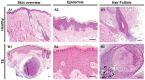
Histology, Trichodysplasia spinulosa, Trichodysplasia spinulosa polyomavirus, Healthy control on pinnacle, TS peel on the bottom, Skin over view, Epidermis, Hair follicle, Acanthosis, Eosinophilic poly peptide granules, trichohyalin, HE Stain. Contributed by Kazem (more...)
Figure
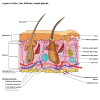
Cantankerous section of layers of the peel. Pilus follicles, pilus roots and pilus shafts, sweat glands, pores, epidermis, dermis, hypodermis. Papillary and reticular layer. Eccrine sweat gland. Arrector pili muscles, sebaceous oil glands. Contributed by Chelsea (more...)

Figure
Illustration of cells of the epidermis. Stratum corneum, stratum lucidum, stratum granulosum, stratum spinosum, stratum basale, dermis. Contributed by Chelsea Rowe
References
- 1.
-
Bonifant H, Holloway S. A review of the effects of ageing on pare integrity and wound healing. Br J Community Nurs. 2019 Mar 01;24(Sup3):S28-S33. [PubMed: 30817191]
- 2.
-
Herskovitz I, Macquhae F, Fox JD, Kirsner RS. Skin motion, wound repair and development of engineered skin. Exp Dermatol. 2016 February;25(2):99-100. [PubMed: 26660718]
- 3.
-
Ravara B, Hofer C, Kern H, Guidolin D, Porzionato A, De Caro R, Albertin 1000. Dermal papillae flattening of thigh peel in Conus Cauda Syndrome. Eur J Transl Myol. 2018 Nov 02;28(four):7914. [PMC costless article: PMC6317141] [PubMed: 30662702]
- four.
-
Rzepka K, Schaarschmidt G, Nagler M, Wohlrab J. [Epidermal stem cells]. J Dtsch Dermatol Ges. 2005 Dec;3(12):962-73. [PubMed: 16405712]
- 5.
-
Karim N, Phinney BS, Salemi M, Wu Pw, Naeem M, Rice RH. Human stratum corneum proteomics reveals cross-linking of a broad spectrum of proteins in cornified envelopes. Exp Dermatol. 2019 May;28(5):618-622. [PubMed: 30916809]
- 6.
-
Brown TM, Krishnamurthy 1000. StatPearls [Internet]. StatPearls Publishing; Treasure Isle (FL): May 10, 2021. Histology, Dermis. [PubMed: 30570967]
- vii.
-
O'Connell RL, Rusby JE. Anatomy relevant to conservative mastectomy. Gland Surg. 2015 Dec;4(half dozen):476-83. [PMC gratuitous commodity: PMC4646999] [PubMed: 26645002]
- eight.
-
Andersson T, Ertürk Bergdahl G, Saleh One thousand, Magnúsdóttir H, Stødkilde One thousand, Andersen CBF, Lundqvist K, Jensen A, Brüggemann H, Lood R. Common peel leaner protect their host from oxidative stress through secreted antioxidant RoxP. Sci Rep. 2019 Mar 05;9(1):3596. [PMC free article: PMC6401081] [PubMed: 30837648]
- 9.
-
Losquadro WD. Beefcake of the Skin and the Pathogenesis of Nonmelanoma Pare Cancer. Facial Plast Surg Clin North Am. 2017 Aug;25(3):283-289. [PubMed: 28676156]
- 10.
-
Slominski AT, Manna PR, Tuckey RC. On the function of skin in the regulation of local and systemic steroidogenic activities. Steroids. 2015 Nov;103:72-88. [PMC free article: PMC4631694] [PubMed: 25988614]
- eleven.
-
Fenner J, Silverberg NB. Peel diseases associated with atopic dermatitis. Clin Dermatol. 2018 Sep - Oct;36(5):631-640. [PubMed: 30217275]
- 12.
-
Hall BK. Germ layers, the neural crest and emergent organization in development and development. Genesis. 2018 Jun;56(6-vii):e23103. [PubMed: 29637683]
- 13.
-
Denkler KA, Denkler C. The Direction of Optimal Skin Incisions Derived from Striae Distensae. Plast Reconstr Surg. 2015 Jul;136(1):120e-121e. [PubMed: 26111326]
- 14.
-
Schlader ZJ, Vargas NT. Regulation of Trunk Temperature past Autonomic and Behavioral Thermoeffectors. Exerc Sport Sci Rev. 2019 Apr;47(2):116-126. [PubMed: 30632999]
- fifteen.
-
Iizaka S. Peel hydration and lifestyle-related factors in customs-habitation older people. Curvation Gerontol Geriatr. 2017 Sep;72:121-126. [PubMed: 28624752]
- 16.
-
Stecco C, Pirri C, Fede C, Fan C, Giordani F, Stecco 50, Foti C, De Caro R. Dermatome and fasciatome. Clin Anat. 2019 Oct;32(7):896-902. [PubMed: 31087420]
- 17.
-
Iheanacho F, Vellipuram AR. StatPearls [Internet]. StatPearls Publishing; Treasure Island (FL): Sep 12, 2021. Physiology, Mechanoreceptors. [PubMed: 31082112]
- eighteen.
-
Murphrey MB, Agarwal S, Zito PM. StatPearls [Internet]. StatPearls Publishing; Treasure Island (FL): Aug xi, 2021. Anatomy, Hair. [PubMed: 30020684]
- 19.
-
Sanz-Gómez N, Freije A, Gandarillas A. Keratinocyte Differentiation by Menses Cytometry. Methods Mol Biol. 2020;2109:83-92. [PubMed: 31123997]
- 20.
-
Wagner T, Beer L, Gschwandtner M, Eckhart L, Kalinina P, Laggner Thou, Ellinger A, Gruber R, Kuchler U, Golabi B, Tschachler E, Mildner Thou. The Differentiation-Associated Keratinocyte Protein Cornifelin Contributes to Cell-Cell Adhesion of Epidermal and Mucosal Keratinocytes. J Invest Dermatol. 2019 November;139(11):2292-2301.e9. [PubMed: 31129056]
- 21.
-
Lemperle G, Knapp D, Tenenhaus M. Minimal Scar Formation After Orthopaedic Skin Incisions Along Primary Folding Lines. J Bone Joint Surg Am. 2019 Mar 06;101(5):392-399. [PubMed: 30845033]
- 22.
-
Tenea D, Dinkel J, Becker JC, van der Walt Due east. Merkel Cell Carcinoma of the Head in a Immature African Albino Woman with HIV/HTLV-i Coinfection Associated with Multiple Squamous Prison cell Carcinomas. Case Rep Dermatol. 2019 Jan-Apr;11(ane):113-122. [PMC free article: PMC6528093] [PubMed: 31143109]
- 23.
-
PDQ Adult Handling Editorial Board. PDQ Cancer Data Summaries [Net]. National Cancer Constitute (US); Bethesda (MD): Sep iii, 2021. Melanoma Treatment (PDQ®): Patient Version. [PubMed: 26389388]
- 24.
-
Cribier B. Ann Dermatol Venereol. 2019 May;146 Suppl 2:IIS10-IIS15. [PubMed: 31133224]
- 25.
-
PDQ Cancer Genetics Editorial Lath. PDQ Cancer Data Summaries [Internet]. National Cancer Institute (US); Bethesda (Physician): Jul 6, 2021. Genetics of Skin Cancer (PDQ®): Health Professional Version. [PubMed: 26389333]
- 26.
-
Izumi K, Bieber 1000, Ludwig RJ. Current Clinical Trials in Pemphigus and Pemphigoid. Forepart Immunol. 2019;10:978. [PMC free article: PMC6509547] [PubMed: 31130959]
- 27.
-
Jordan KS. Staphylococcal Scalded Skin Syndrome: A Pediatric Dermatological Emergency. Adv Emerg Nurs J. 2019 Apr/Jun;41(ii):129-134. [PubMed: 31033660]
- 28.
-
Vern-Gross TZ, Kowal-Vern A. Erythema multiforme, Stevens Johnson syndrome, and toxic epidermal necrolysis syndrome in patients undergoing radiation therapy: a literature review. Am J Clin Oncol. 2014 Oct;37(5):506-13. [PubMed: 22892429]
- 29.
-
PDQ Pediatric Treatment Editorial Board. PDQ Cancer Information Summaries [Internet]. National Cancer Plant (United states of america); Bethesda (Dr.): Aug 27, 2021. Langerhans Jail cell Histiocytosis Treatment (PDQ®): Patient Version. [PubMed: 26389196]
- xxx.
-
Sander MA, Sander MS, Isaac-Renton JL, Croxen MA. The Cutaneous Microbiome: Implications for Dermatology Do. J Cutan Med Surg. 2019 Jul/Aug;23(4):436-441. [PubMed: 30938174]
cusackcoubjecruir92.blogspot.com
Source: https://www.ncbi.nlm.nih.gov/books/NBK470464/
0 Response to "What Is the Term That Refers to the Connective Tissue Layer of the Skin Beneath the Epidermis?"
Post a Comment